
3 MIN READ·NOVEMBER 3, 2025
What Risk-Off Really Means (and How We Profit From It)
Understanding the Regimes We identify risk regimes by analyzing the growth impulses within our macro regime system. By tracking the four macro outcomes: Expansion (Growth +, Inflation –), Inflation (Growth +, Inflation +), Stagflation (Growth –, Inflation +),
MR
CONTRIBUTOR · MARKET RADAR

Understanding the Regimes
We identify risk regimes by analyzing the growth impulses within our macro regime system. By tracking the four macro outcomes: Expansion (Growth +, Inflation –), Inflation (Growth +, Inflation +), Stagflation (Growth –, Inflation +), and Deflation (Growth –, Inflation –), we can derive what we call risk dynamics. These dynamics simplify the overall risk structure, condensing the four macro regimes into three clear risk zones: Risk-On, Slowdown, and Risk-Off.
When the underlying strength of growth impulses is positive, shown as orange boxes above the zero line on the x-axis, we’re in a Risk-On regime. If those impulses fall below zero but remain within the Slowdown threshold (down to –50%), the system enters a Slowdown phase, where growth is weak but not yet concerning. When impulses drop decisively below the Slowdown barrier, the environment shifts into a Risk-Off regime.
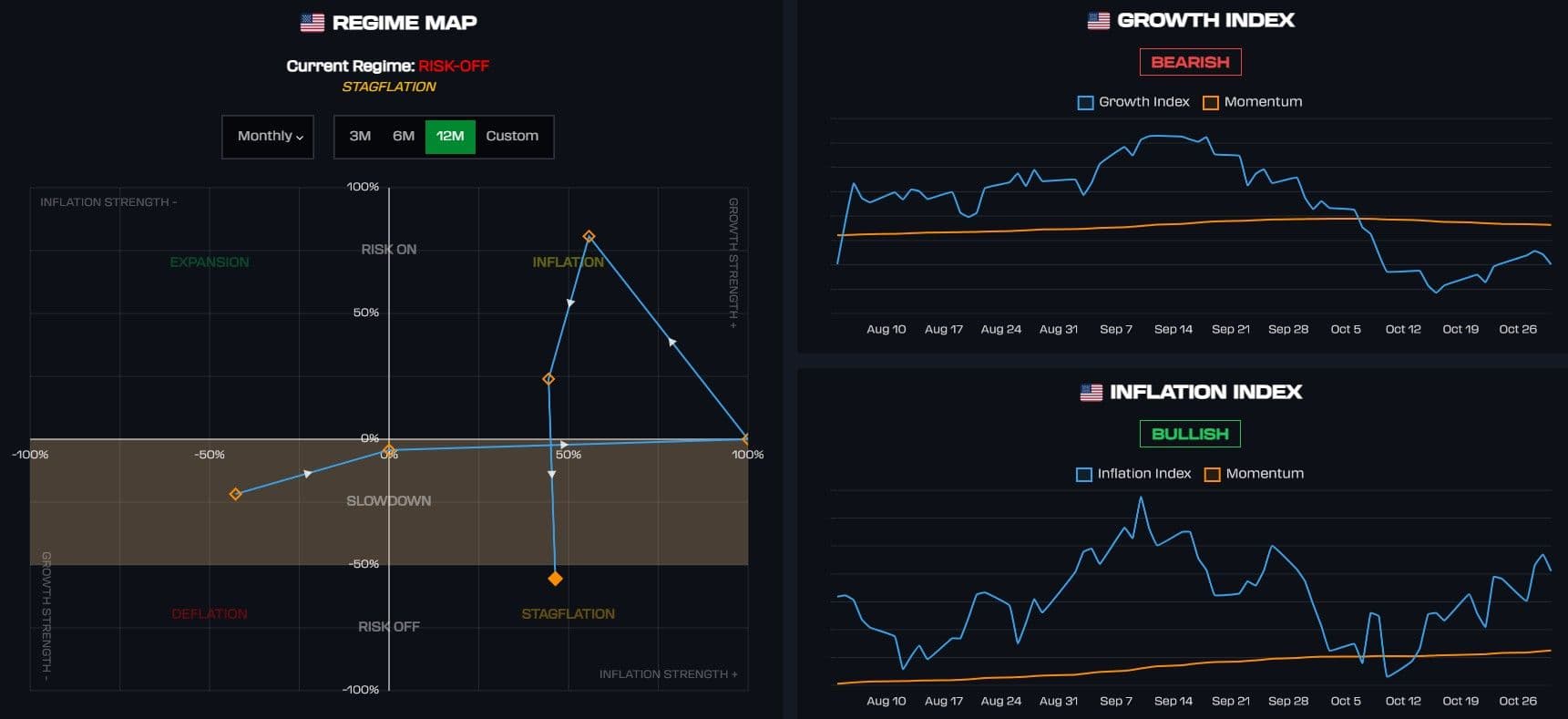
The regime map (left) is built using the calculated trend strength values of the growth and inflation index readings shown on the right. When regimes shift, these trends are reset. Unlike typical systems, our framework cannot transition directly from Risk-On to Slowdown, because strength scores are indexed to ±100% during trend resets. This means the system is designed to move between Risk-On and Risk-Off states rather than linger in between. It's only once a Risk-Off regime is established that we can then adjust to a Slowdown if conditions improve and risks to growth become clear that its weakness won't lead to systemic issues in markets.
This is not a flaw; it’s an intentional design choice aimed at moving to safety as quickly as possible. While this structure may occasionally take us out of risk slightly early, it ensures we avoid most major negative shifts in market conditions. Survival is key when using leverage.
Historical Performance
On average, Risk-Off periods tend to be highly detrimental to most sectors as investors move toward safety. During these phases, assets such as bonds, utilities, healthcare, and consumer staples typically hold up better, as their businesses are less sensitive to economic downturns. These performance patterns, calculated using data since 1991, have remained consistent across all recent Risk-Off regimes.
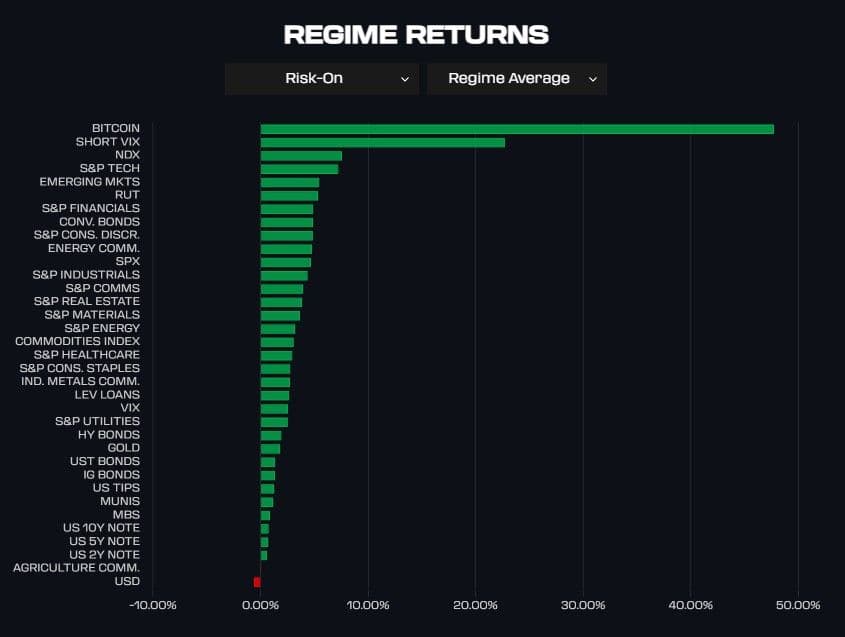
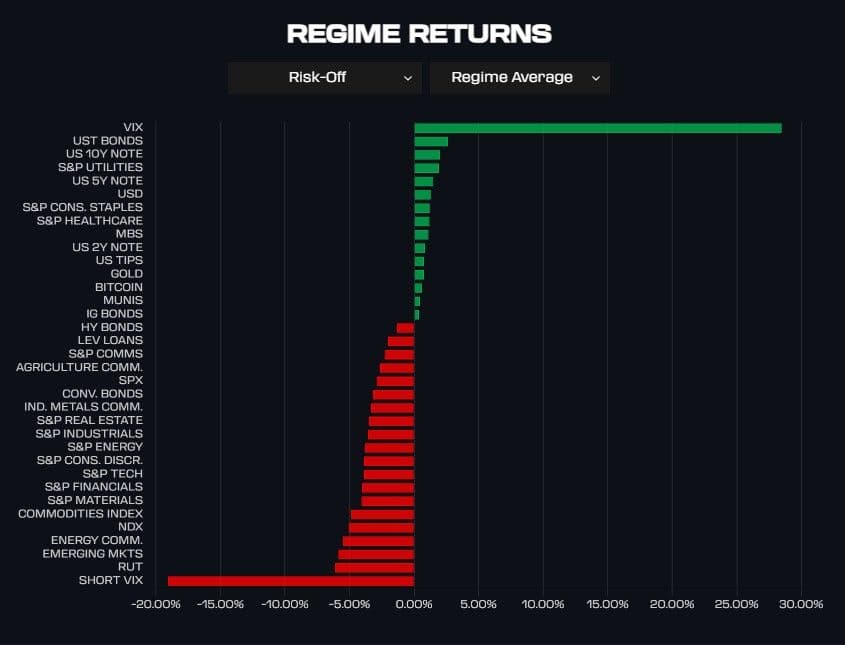
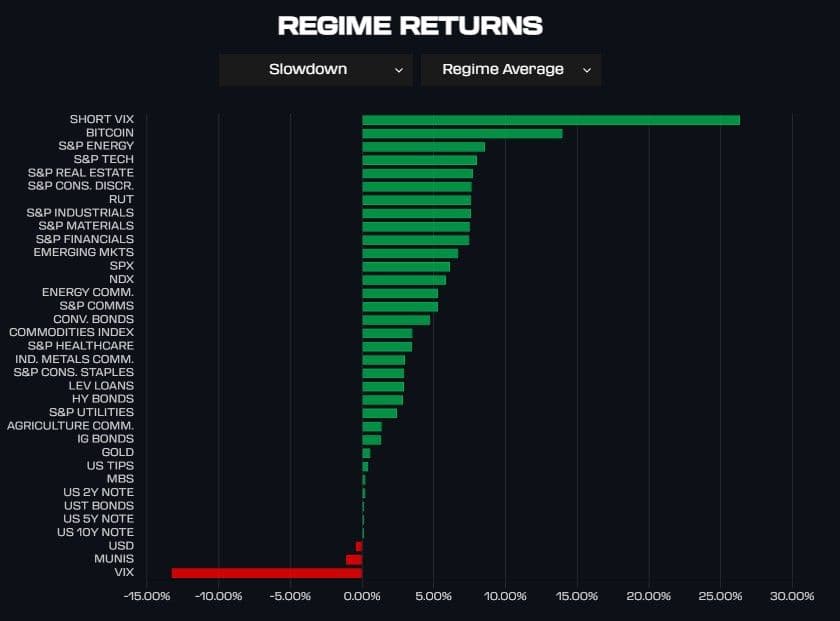
While performance patterns vary sharply between Risk-On and Risk-Off regimes, the differences between Slowdown and Risk-Off are far less pronounced. In fact, Slowdown regimes often behave more like Risk-On environments than Risk-Off ones. This is why you’ll see RQF maintain some equity exposure in defensive stocks in Slowdown regimes, alongside the allocations typically used in Risk-Off periods.
🚀 Join the Radar Community
Get free access to MacroBase and notifications about new posts and updates.
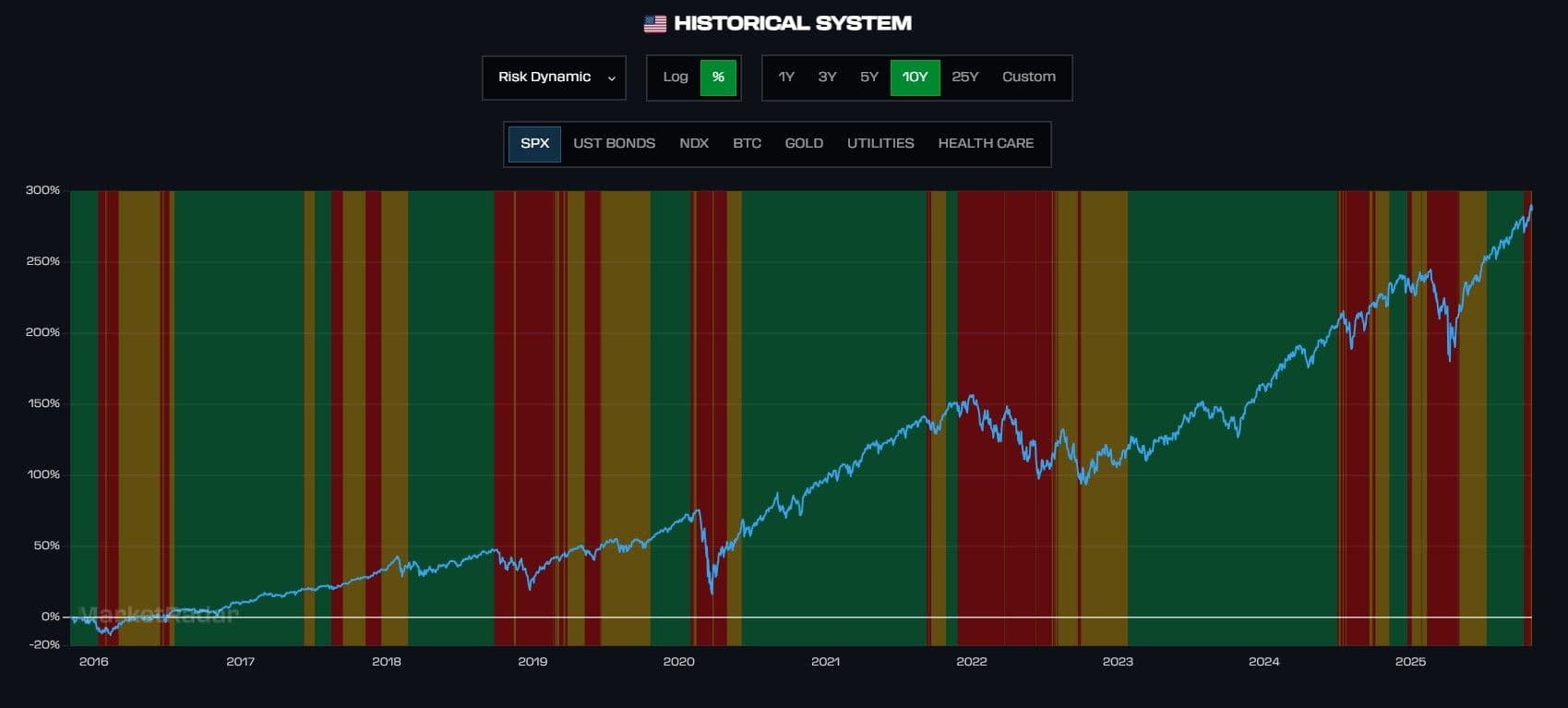
Now, let’s connect this framework to the actual stock market (SPX). It’s important to understand that not every Risk-Off regime results in a market crash, though history shows the odds are heavily tilted in that direction. This is the foundation of systematic trading, positioning based on probabilities rather than predictions. Over the past decade, there have been seven Risk-Off periods, six of which led to significant market declines.
Below, you can see the risk dynamic color shading: Green for Risk-On, Orange for Slowdown, and Red for Risk-Off. As of this writing, the system has once again shifted into a Risk-Off environment.
Ways to Capitalize on Risk-Off
Outside of a Risk-On regime, when growth impulses are no longer positive, positioning typically falls into two categories. You can position for a Slowdown, which often involves positions in defensive equities, bonds, and gold. Alternatively, you can position for a Risk-Off strategy, which focuses on bonds and gold without any equity exposure.
Because equity markets tend to have a long-term positive drift, shorting them can be challenging. While short positions can work during Risk-Off periods, they are often less efficient and harder to execute than the complementary long positions available in Slowdown or Risk-Off environments. These long setups tend to be more reliable and easier to capitalize on. In our experience, the paths of least resistance are often the ones that, when compounded over time, generate the most significant returns.
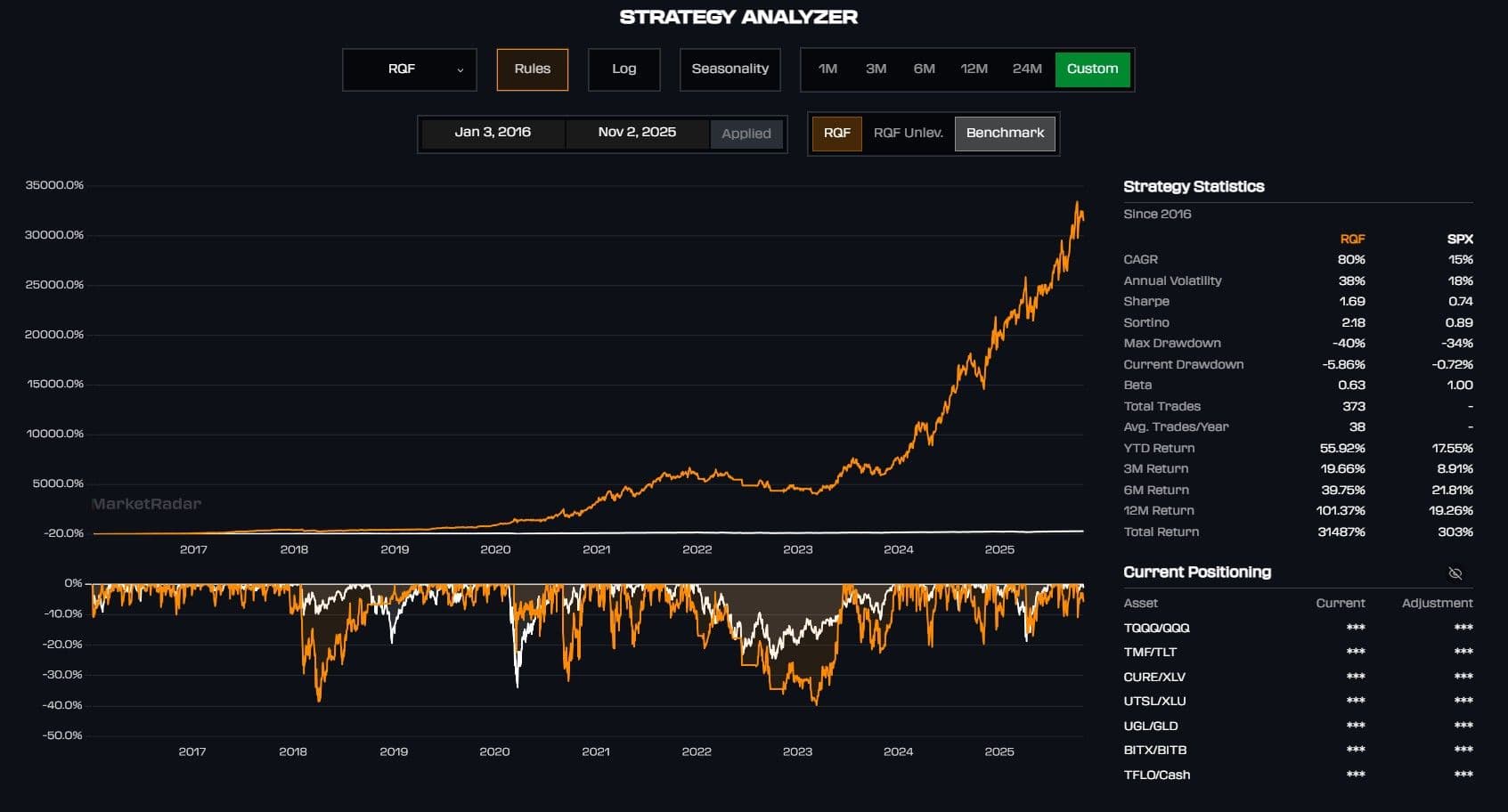
For those less familiar with our approach, our strategy involves taking leveraged positions aligned with the prevailing risk dynamics in the market. This means we aim to bet aggressively during Risk-On periods, while also capitalizing on fear and uncertainty through leveraged Slowdown and Risk-Off plays when market conditions shift. This allows our strategy to compete with SPX in terms of volatility and drawdowns, while providing significantly more upside in the process.
Want to know how we’re positioning before the next market shift? Subscribe below to get real-time access to our models, signals, and strategy updates.
MOST POPULAR
Unlock Premium Content
The remainder of this content is available to Radar members only. Subscribe to gain instant access.
$65/month
Billed annually at $780 (Save $120)
Access Models which boast 40%+ average yearly returns
Automated Portfolio Signals (RQF Strategy)
Live Calls with experienced traders
QuantBase Dashboard with macro regime models
DDAP TradingView Indicator
Real-time portfolio updates
Private Discord Channels
Lifetime Price Lock|Instant Access