The Growing Evidence Behind a Global Risk-Off Turn
When markets feel calmest, that’s often when the real shifts begin. Our system triggered a risk-off signal on Friday, October 10th, and by the close on Monday, October 13th, we sold all our risk assets (BITX and TQQQ), to understand why read this breakdown. Th

When markets feel calmest, that’s often when the real shifts begin. Our system triggered a risk-off signal on Friday, October 10th, and by the close on Monday, October 13th, we sold all our risk assets (BITX and TQQQ), to understand why read this breakdown. These signals tend to fire early, sometimes so early that the reasoning isn’t immediately visible. That’s intentional. Once the risks are clear to everyone, the market has usually already moved, and the potential return is much smaller.
Since Friday, several developments have started to validate that early signal. This ledger breaks down what’s building beneath the surface, and what we’re watching for signs of a deeper risk-off acceleration.
Commodities are the Core Driver
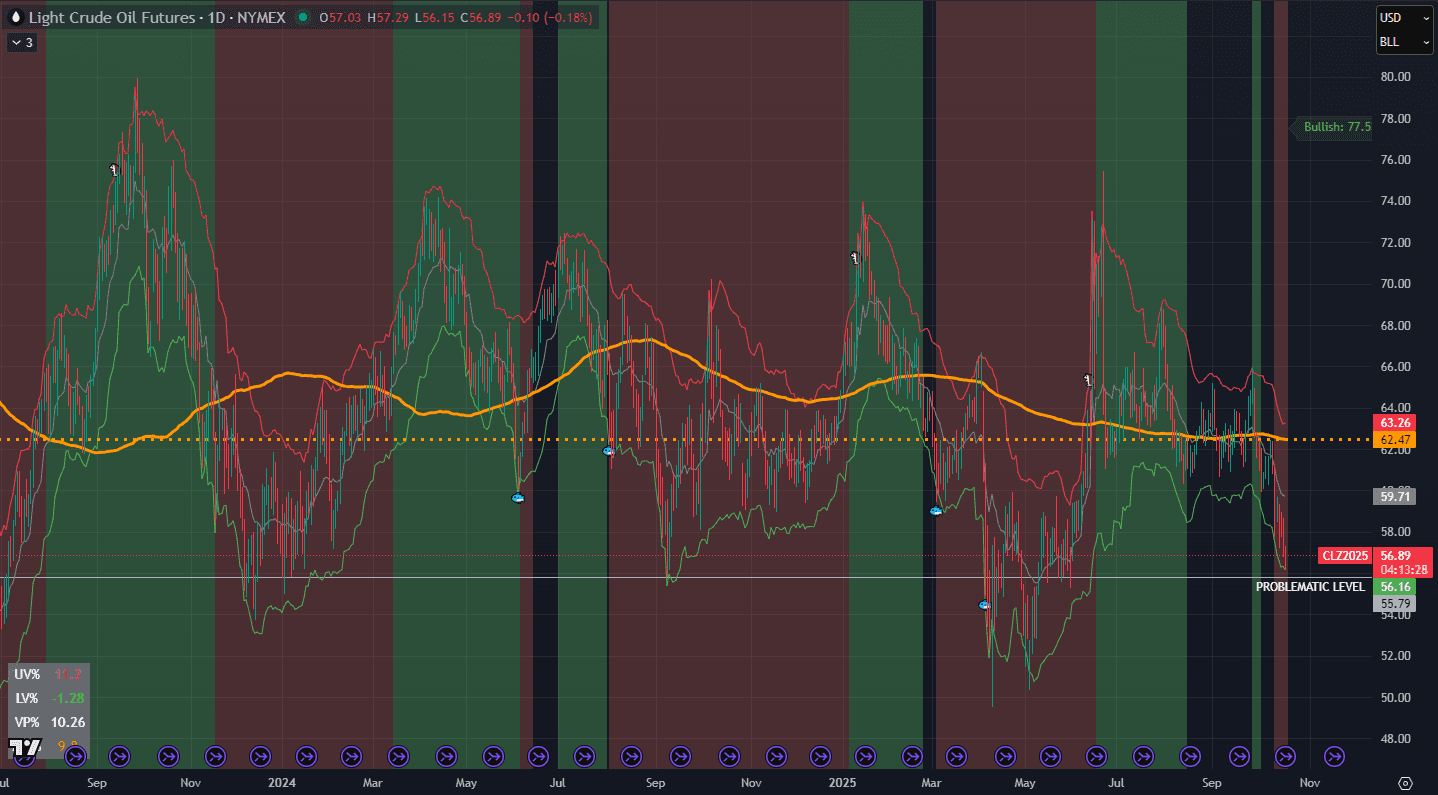
The main signal we’re tracking is a potential downside acceleration in commodities. Crude oil (CL) has been steadily declining within a bearish trend. This becomes particularly concerning for equities once crude approaches $56 per barrel. On Thursday night, crude briefly hit $56.17, pulling the ES down to $6571, just before Trump announced he would not impose 100% tariffs on China.
Crude acts as both an inflation and growth proxy. Its movement toward the lows suggests expectations for both are slipping, reinforcing a broader risk-off tone.
Watching Copper for Confirmation
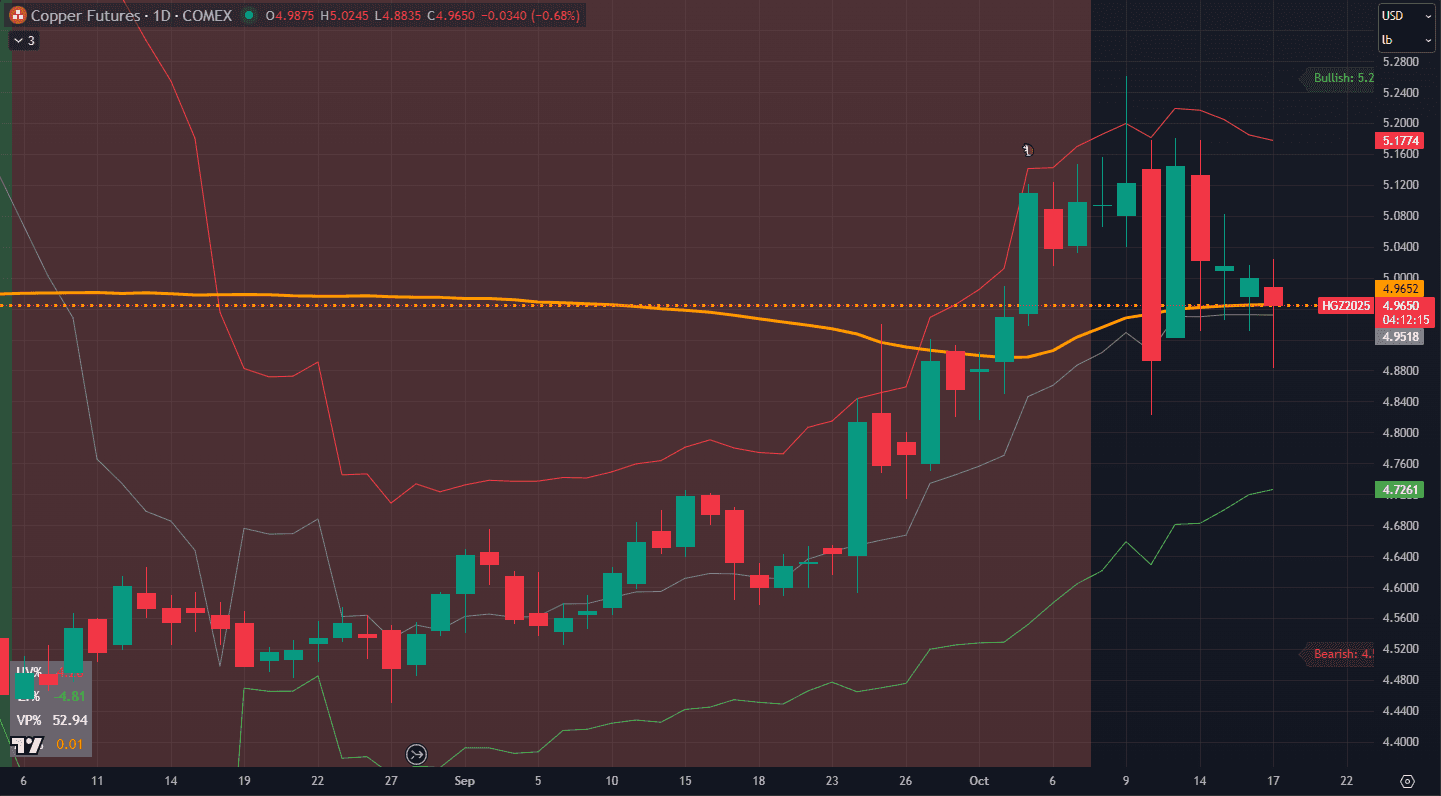
Next, we’re watching copper (HG) another growth and inflation barometer. So far, copper has held up better than crude, but a breakdown below momentum (momo) would add significant weight to the risk-off narrative. Such a move would confirm that a growth shock is taking shape, strengthening the case for a sustained downturn.
The Broader Commodity Picture
🚀 Join the Radar Community
Get free access to MacroBase and notifications about new posts and updates.
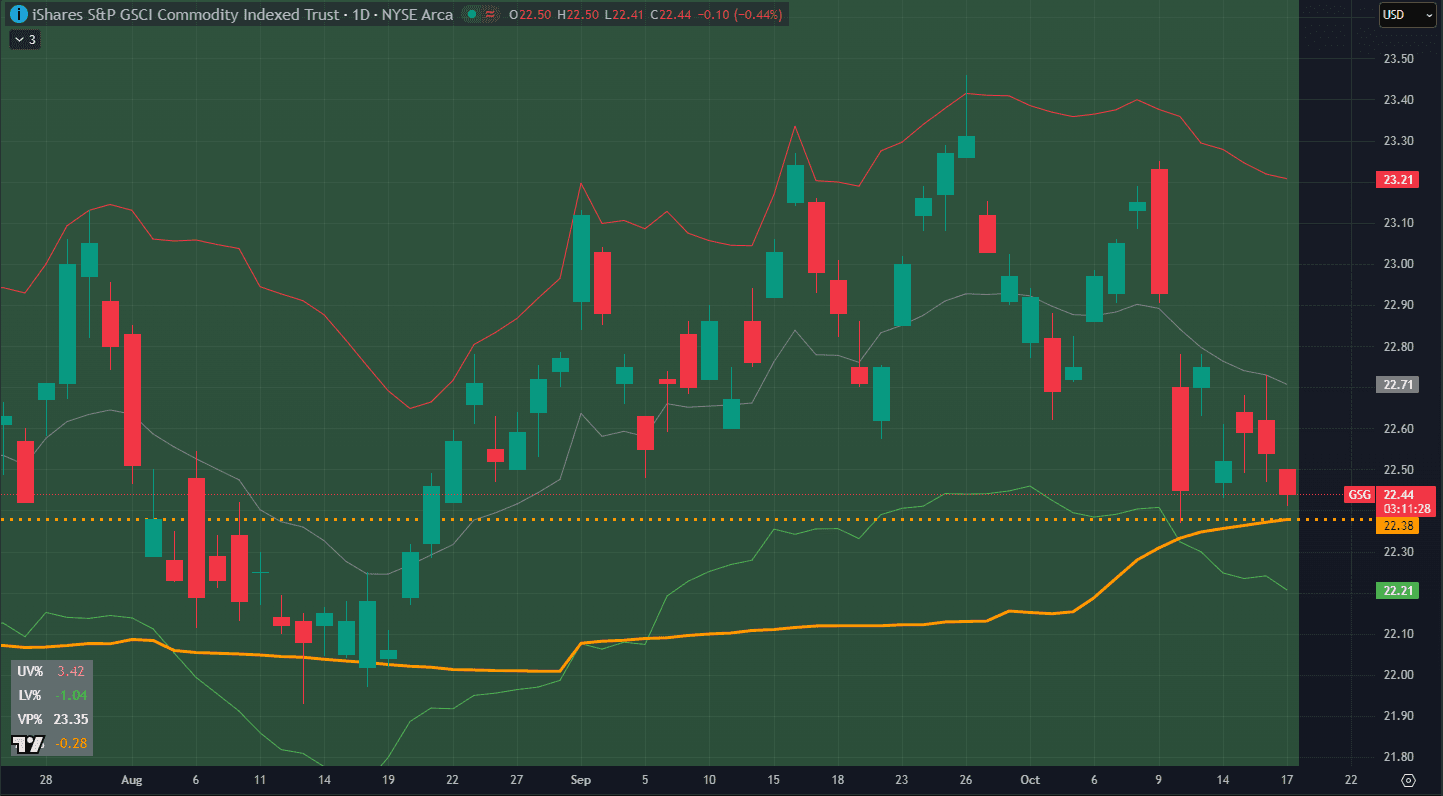
To gauge overall commodity sentiment, we’re also tracking the GSG commodity basket. It’s currently testing its momentum level. A confirmed breakdown below momo and into a bearish trend would provide even more evidence of a broader economic slowdown.
Inflation Swaps Tell Their Own Story
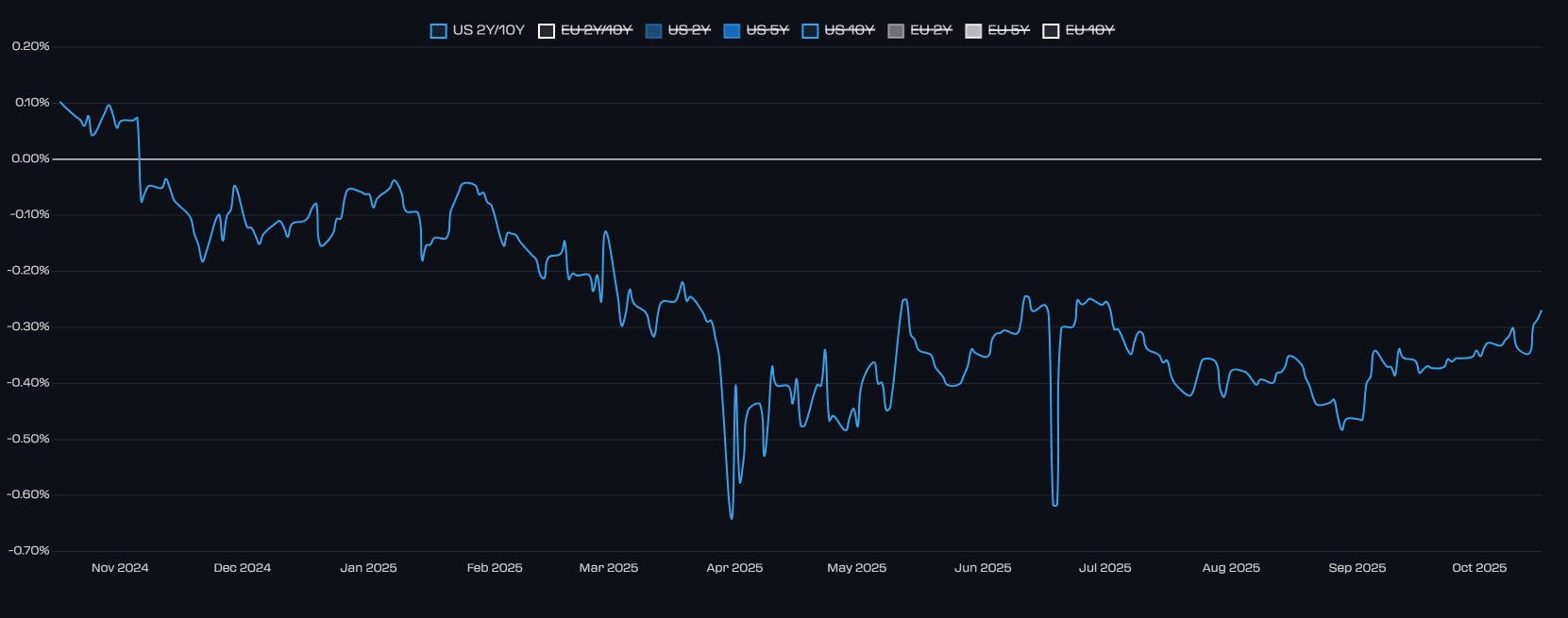
Inflation swaps give us a more direct look at isolated inflation expectations. 2-year swaps remain relatively high due to tariff-related uncertainty, while 5-year and 10-year swaps are much lower. This divergence highlights how short-term inflation fears are not translating into long-term expectations.
We’re particularly focused on the 2Y/10Y swap spread. As that spread narrows toward zero, the market will likely lean further into a disinflation narrative, another driver of risk-off sentiment.
What the System is Showing
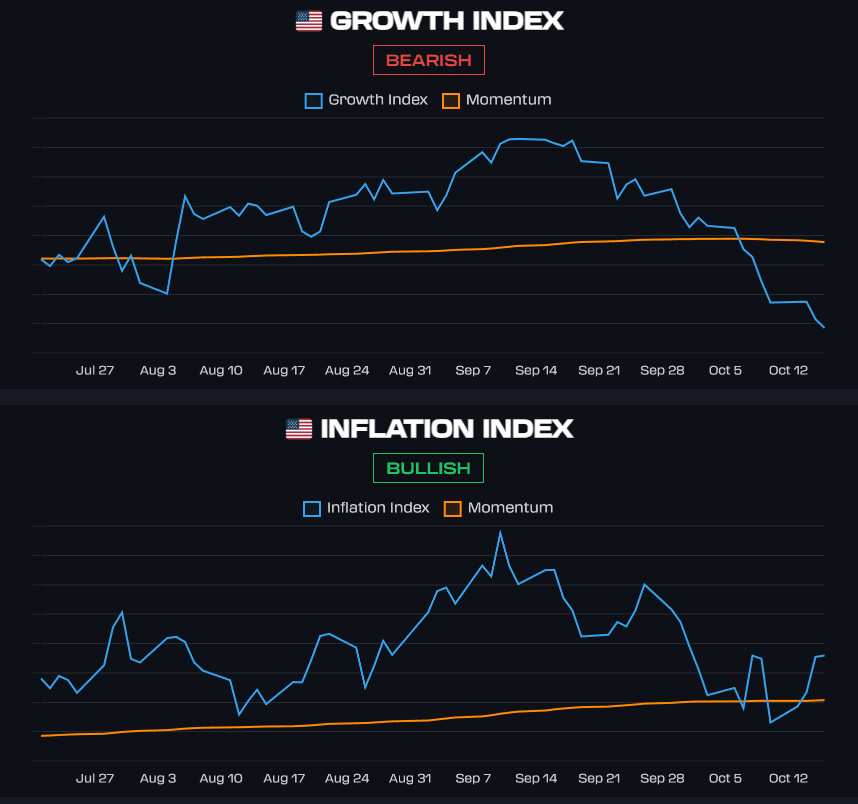
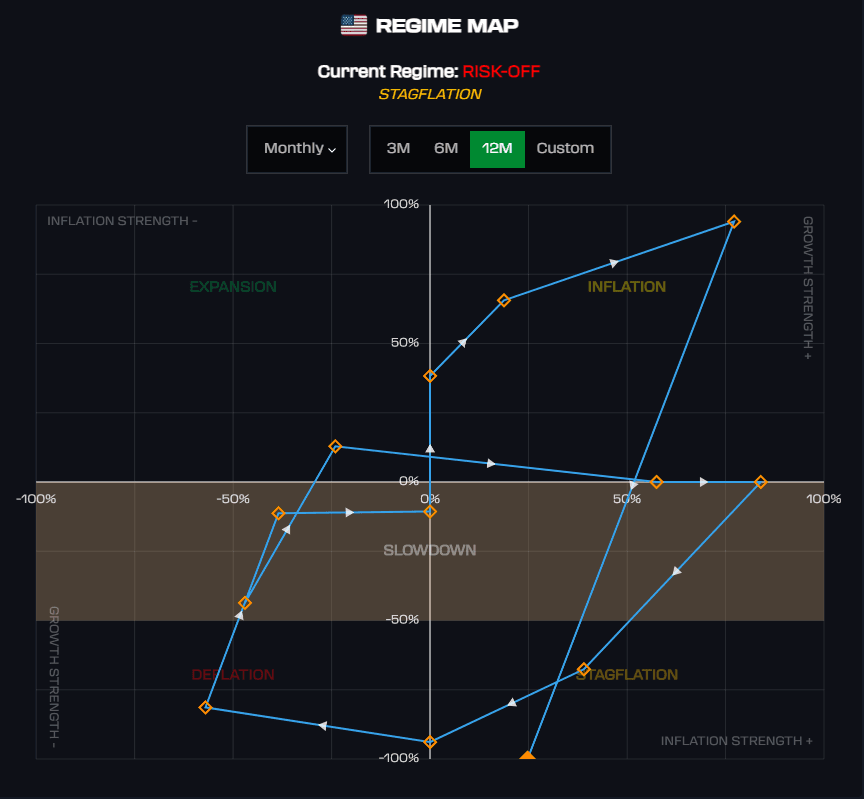
Our System continues to show deterioration in growth, which has now shifted fully into a bearish trend and is weakening almost daily. Inflation expectations, however, are still holding above momentum in a bullish trend. For this risk-off move to truly accelerate, inflation needs to break down as well.
If inflation remains firm while growth weakens, we risk staying in stagflation, a mix of slowing growth and persistent inflation. That would likely produce a choppy environment for both stocks and bonds. However, if growth deteriorates further, inflation will eventually follow it lower, paving the way for a cleaner and more aggressive risk-off move.